Have you ever wondered what happens to your beer
bottles once you've finished drinking the beer and threw away or recycled the
bottle? There are some extraordinary buildings that may give you an answer why
recycling is such a great and useful thing!
Buddhist temple built from beer bottles
When you’re free-associating about Buddhist
monks, beer probably isn’t the first thing that comes to your mind. Drinking is forbidden in Buddhism indeed, but they certainly don’t have
any issues with building temples from beer bottles.
In the north-east of Thailand, there is a temple
built from more than 1.5 million recycled beer bottles, called Wat Lan Kuad, the Temple of a Million Bottles.
Using Heineken bottles
(green) and Chang Beer bottles (brown) monks were able to clean up the local
pollution and create a useful structure. The bottles do not lose their colour, provide good
lighting and are easy to clean.
The monks have created a complex of around 20
buildings, comprising the main temple over a lake, crematorium, prayer rooms, a
hall, water tower, tourist bathrooms and several small bungalows raised off the
ground which serve as monks quarters.
They also created
decorative mosaics with the leftover bottle caps. The only part they didn’t use
is the actual beer.
The
beer can house
In 1968, John Milkovisch was just another
retired employee of Southern Pacific railroad. He lived in an undistinguished
house in an undistinguished suburban neighborhood of Houston. Then John got
antsy: he turned his 6-pack a day habit (he believed it was the cure to whatever ailed him) into an 18-year home renovation project. John
decorated his Houston, Texas house with aluminum siding made from flattened
cans, streamers of beer can pull-tabs, and an odd assortment of beer can
sculptures.
Milkovisch started his project in 1968 inlaying
thousands of marbles, rocks, brass figures and metal pieces in concrete blocks
and redwood, all of which were used to make patios, fences, flower boxes, and
an array of other items. The result was a yard with no grass, as the entire
front and back yards were covered with cement. When asked why he did it, John
simply answered, “I got sick of mowing the grass.”
John considered his work an
enjoyable hobby rather than a work of art, but he did enjoy people's reaction
to his creations. He once said, "It tickles me to watch people screech to
a halt. They get embarrassed. Sometimes they drive around the block a couple of
times. Later they come back with a car-load of friends..."
Monday, 15 July 2013
Friday, 12 July 2013
The origin of Dracula’s legend
Early
belief in vampires was thought to have come from people at the time not fully
understanding the process of a body decomposing after death and trying to
rationalize this by creating the figure of the vampire to explain it.
Dracula is more than 100 years old and still alive! Of course, almost
everybody has heard about Nosferatu that appears in movies, several books, or even
in bedtime stories told us in our childhood.
(The film
has incorporated female sexuality as a hidden message of Christianity and
redemption.)
We
all have an idea of who or what the Count was. However, Vlad Tepes (Dracula),
the historical figure who inspired Bram Stoker’s novel, is definitely less
known.
The
story of Dracula was partly based on European folklore and unrelated historical
events.
The word dracul is from the Megleno-Romanian
language, means 'devil'.
The
author of 'Dracula', Bram Stoker, spent several years researching the folklore
about an Eastern European count, Vlad Tepes.
Bram Stoker
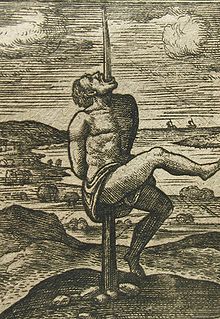
Vlad Dracula is most famously known as 'Vlad the Impaler'. He was called
this because this was his preferred method of executing people. It is an
extraordinarily painful way to die. Tepes ensured maximum pain when he impaled
his victims by rounding the ends of spikes and oiling them to reduce tearing.
Spikes were introduced into the victim's anus and pushed in until the other end
emerged from the victim's mouth. The impaled victim was then hoisted
vertically, and left to writhe in agony, sometimes for days.
It's also significant to note that eating and death were intertwined in
Tepes' life. He often dined with guests before killing them, and he was reputed
to have taken meals outdoors, among impaled dead and dying.
Tepes was not a vampire, although one historic account details how he
drank a victim's blood. Thousands of people were tortured, disabled or killed
by his hand or command.
So
who was this man? Was Tepes as bloodthirsty in real life as his fictional
counterpart in movies and books? The short answer is yes - even more so.
Thursday, 4 July 2013
Crazy laws from around the world
We have brought you the weirdest and funniest
laws from around the world! Below you can read 20 laws that are still on the
books! Unfortunately we don’t know the origin of most of them, but their
stories must have been very interesting. We wouldn't recommend using these laws
as evidence in court unless you'd like the judge to laugh you into jail!
1. It is lawful to kill a
Scotsman in York if he is carrying a bow and arrow.
2. In the
United Kingdom taxi drivers must ask passengers if they are suffering from
plague or smallpox.
3. In the UK it is legal for a male to urinate in public, as long as it is on
the rear wheel of his motor vehicle and his right hand is on the vehicle.
4. You can shoot a Welsh
person with a bow and arrow in Chester, inside the city walls and after
midnight.
5. A bed may not be hung out of a window.
6. It is illegal for a lady
to eat chocolate on a public conveyance.
7. Any boy under the age of
10 may not see a naked mannequin.
8. In Australia a hackney carriage
(i.e. taxi) driver must (still) carry a bale of hay and a bucket to feed
and water his horse.
9. In Denmark when
driving a car, you must have someone at the front of the car waving a flag so
that carriages with horses that come opposite know that there’s an engined car
coming.
10. In Denmark if
someone in a carriage is trying to get past a car and the horses seem
disturbed, the car’s driver must pull over, calm down the horse and cover up
the car.
11. In Scotland, if someone knocks on your door and requires the use of your
toilet, you must let them enter.
12. In France, it is illegal to name a pig Napoleon.
13. In Milan, it
is a legal requirement to smile at all times, except funerals or hospital
visits.
14. A dogcatcher must notify the dog at least three days
before they capture them, of their intentions in Colorado.
15. Citizens may not enter Wisconsin with a chicken on
their head.
16. A man with a mustache can never legally kiss a woman
in public in Iowa.
17. In Tennessee it’s illegal for a woman to drive unless a man is in front
of the car waving a red flag.
18. In France it is
forbidden without a cemetery plot to die on the territory of the commune.
19. A person may not cross any state lines with a duck on top of his head.
20. In Arizona donkeys cannot by law sleep in bathtubs.
Wort der Woche
Ihr
Steckenpferd haben die Deutschen besonders gern. Und jeder hat sein eigenes,
von dem er anderen Menschen am liebsten den ganzen Tag erzählen würde.
Immer
seltener sieht man Kinder mit einem Steckenpferd spielen. Das ist ein Stock mit
einem Pferdekopf. Mit den Händen am Kopf und dem Stock unter dem Hintern kann
man so auf den eigenen Beinen durch die Gegend hüpfen und sich wie ein
richtiger Reiter fühlen. Erwachsene hingegen haben heute wesentlich öfter ein
so genanntes Steckenpferd – nämlich ein Thema über das sie besonders viel und
gerne sprechen. Ursprünglich kommt der Begriff vom englischen hobby horse, der Bezeichnung
für eine Verkleidung als Pferd bei traditionellen Umzügen. Davon abgeleitet
wurde auch das Worthobby als
Bezeichnung für eine Freizeitbeschäftigung, das sowohl im Englischen als auch
im Deutschen gebraucht wird. Wer also viel über sein Lieblingsthema oder sein
Hobby redet, der reitet auf seinem Steckenpferd regelrecht herum.
Forrás: www.dw.de/deutsch-lernen
Tuesday, 2 July 2013
Cocktails for summer
Need to cool off? Grab a refreshing summer cocktail! Whether
you prefer alcohol-free fruity tastes, liquors or hard drinks, we've got 3
simple recipes that are sure to refresh and impress.
Piña Colada Punch
When
you're fed up with your job or just would like to cheer up, alcohol-free punches and cocktails really come into
their own. Why should you drink water when you can keep cool with a refreshing Piña Colada Punch?
1 tablespoon coconut syrup
1 tablespoon cinnamon
2 literschilled pineapple soda
1. Blend pineapple juice, coconut syrup, coconut cream and cinnamon in a blender until creamy. Place in refridgerator if desired or continue immediately to next step.
2. Add mixture from previous step to a punch bowl. Add ice-cream and allow
to mostly dissolve. Add pineapple soda, an ice ring, and thin orange slices.
Tropical Sundae Cocktail
If you are a beginner alcoholic, this is a must try for you!
1 oz Creme de Banana
2 oz half & half
1 oz pineapple juice
1 banana cut into chunks
ice
chocolate syrup, 1 maraschino cherry, 1 pineapple chunk for garnish (optional)
Combine all ingredients except the garnish
ingredients in a blender and blend. Swirl chocolate syrup inside the
glass, pour and enjoy!
.50
Caliber
This .50 Caliber Whiskey Cocktail is rightly named so. Are you a whiskey
lover? Try this extremely hard drink that brings together a few whiskey brands
and other spirits! This cocktail is not meant for amateur drinkers!
Ingredients:
Jack Daniels 1⁄2 OunceJim Beam 1⁄2 Ounce
Gin 1⁄2 Ounce
Vodka 1⁄2 Ounce
Citrus 1⁄4 Ounce
Monday, 1 July 2013
Summer courses
Do you want to spend your time useful in summer?
You can take part in our English and German lessons and have fun at the same time during the summer months, too.
Visit our website and learn about our school, courses and prices.
www.riversidestudio.hu
You can take part in our English and German lessons and have fun at the same time during the summer months, too.
Visit our website and learn about our school, courses and prices.
www.riversidestudio.hu
Labels:
language learning,
language school,
summer courses
Monday, 19 March 2012
How do people celebrate St. Patrick's day?
St. Patrick’s Day is celebrated on 17th March as it is believed that the patron saint of Ireland died on that day in the year 461 AD. It is basically a worldwide celebration of Irish culture and history, particularly at places with a lot of Irish immigrants. St. Patrick’s Day is a national holiday in Ireland and Christians usually attend a mass to honour St. Patrick who converted many pagans to Christianity.
The actual color of St. Patrick is blue. Green became associated with St. Patrick's Day during the 19th century. Green was worn by people to encourage their crops to grow.
In Ireland on St. Patrick’s Day, people traditionally wear a small bunch of shamrocks on their jackets or caps.
The shamrock, the three-leafed clover is the symbol of Ireland and St. Patrick's day, the saint used it as a metaphor for the Christian Trinity.
Just like the Princess of Cambridge
The phrase, "Drowning The Shamrock" is from the custom of floating the shamrock on the top of whiskey before drinking it. The Irish believe that if you keep the custom, then you will have a prosperous year.
Women and girls wear green ribbons in their hair.
Many people dye their hair green or wear green wigs for the special day.
34 million Americans have Irish ancestry, according to the 2003 US Census. That’s almost nine times the population of Ireland, which has 4.1 million people so it is not surprising that St. Patrick's day is also widely celebrated around the USA.
Even in McDonalds
Many bars in the United States, and abroad, serve green beer.
In Seattle, there is a ceremony where a green stripe is painted down the roads.
And have you ever seen Google on 17th March?
Happy St. Patrick's Day!
Labels:
Ireland,
national holidays,
shamrock,
St. Patrick's Day
Subscribe to:
Posts (Atom)

%5B2%5D.jpg)
%5B2%5D.jpg)
%5B2%5D.jpg)
%5B2%5D.jpg)